
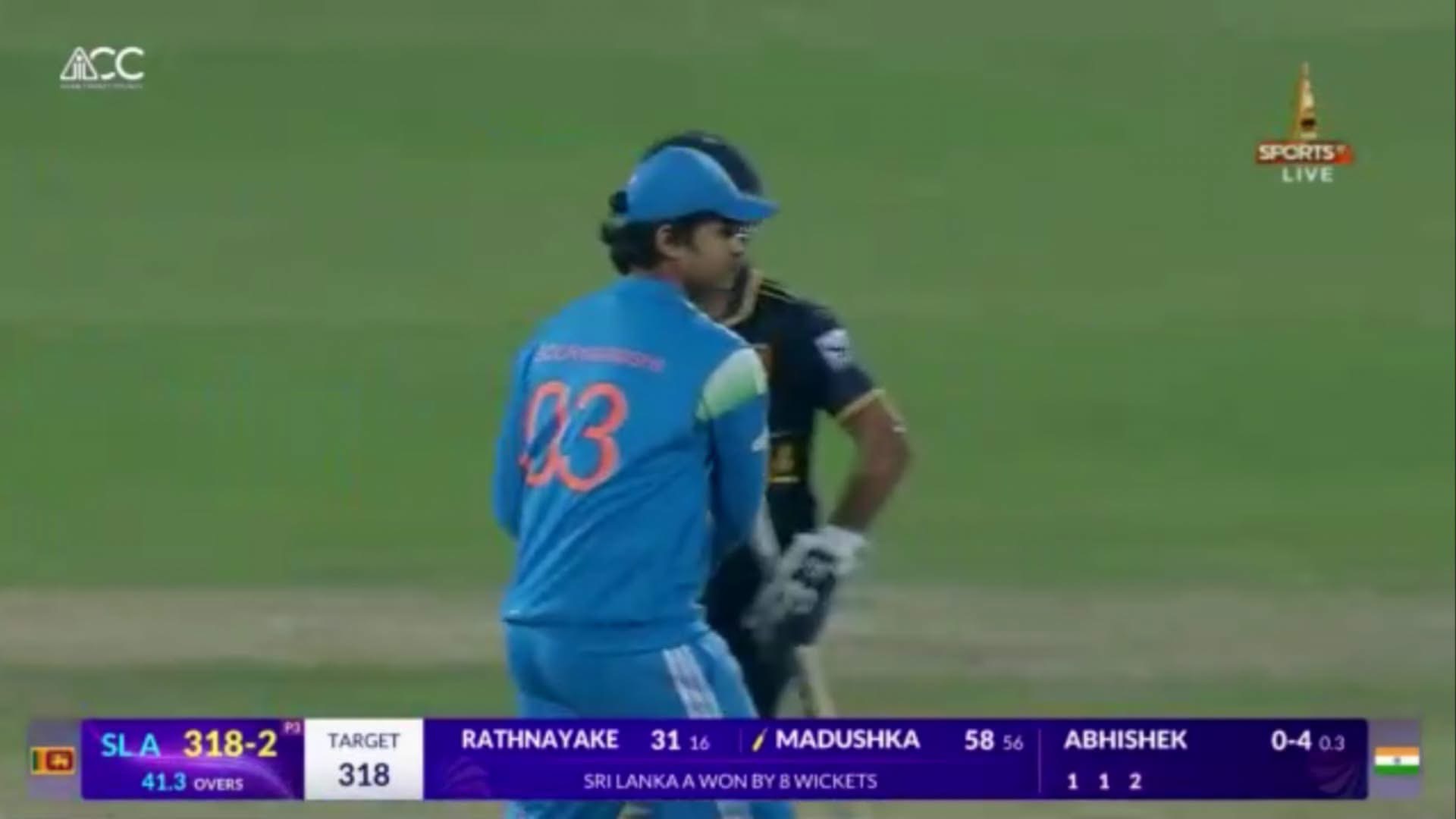
Sri Lanka A’s eight-wicket win over India A in the Rising Stars Asia Cup semi-final was not simply a case of chasing down 318. It was a demonstration of how two set batters can take a daunting target away from the opposition by combining control with calculated aggression.
The chase was decided by the opening partnership
Lasith Croospulle’s 116 from 107 balls and Sineth Jayawardena’s 105 from 70 gave Sri Lanka A the platform they needed. Jayawardena attacked at a higher tempo, while Croospulle anchored the innings and kept the chase moving. Their contrasting approaches meant India A could not settle into a single bowling plan.
Most importantly, Sri Lanka A did not allow the required rate to become a source of pressure. By the time the opening pair had done their work, the target was within reach and the remaining batters could finish without taking unnecessary risks.
India A had runs, but could not defend them
India A’s 317/8 was a substantial total. Abhishek Sharma’s 78, Tilak Varma’s 53 and Shahbaz Ahmed’s unbeaten 54 provided the main contributions, with Vaibhav Sooryavanshi adding a rapid 40. The score was strong enough to give the bowlers a chance, but the defence required early breakthroughs and sustained control.
Instead, Sri Lanka A’s top order took command. India A managed only two wickets across the chase, leaving little opportunity to build pressure through successive dismissals. The match underlined that a total above 300 is not automatically safe when the opposition’s top order bats deep and scores at a high tempo.
What the result tells us
For Sri Lanka A, the performance was a statement of batting depth and composure under knockout pressure. Croospulle and Jayawardena supplied the match-winning platform, while Nishan Madushka’s unbeaten 58 and Pavan Rathnayake’s unbeaten 31 ensured there was no late wobble.
For India A, the key question will be how to turn a competitive first-innings score into a defendable one. The bowling unit will need to review how the opening partnership was allowed to grow and why the scoring rate was not checked before the chase became comfortable.
Final assessment
Sri Lanka A won because their two opening batters seized control of the chase and kept it there. India A’s batting effort deserved to set up a contest, but their bowlers could not make the breakthrough often enough. A target of 318 was chased down with 51 balls remaining — a decisive finish and a deserved place in the final.
Match facts: India A 317/8 (50 overs); Sri Lanka A 318/2 (41.3 overs). Sri Lanka A won by 8 wickets.
Sources: BCCI Match Centre | The Statesman